Streaming measurements
The samples and case studies behind Models larger than memory show what the lossless over-budget path produces, what each lossy setting did on four models, and how a setting is certified.
What the over-budget case produces
Two single samples came from Kimi-K3, a 2.8T-parameter MoE, generated on an
M5 Max MacBook Pro with 128 GB. Both used --stream-experts at streaming
defaults, on the lossless path. The prompt is the one-shot
canvas-animation prompt that the lossy-setting comparisons also use. Each
screenshot links to the generated page, committed beside it in
docs/assets/perf/. GitHub shows a page's source, so download one to
watch the animation.

The UD-IQ2_XXS file is 662 GB. One generation wrote 30.8k tokens, thinking included, at 1.34 tok/s and temperature 1.0.
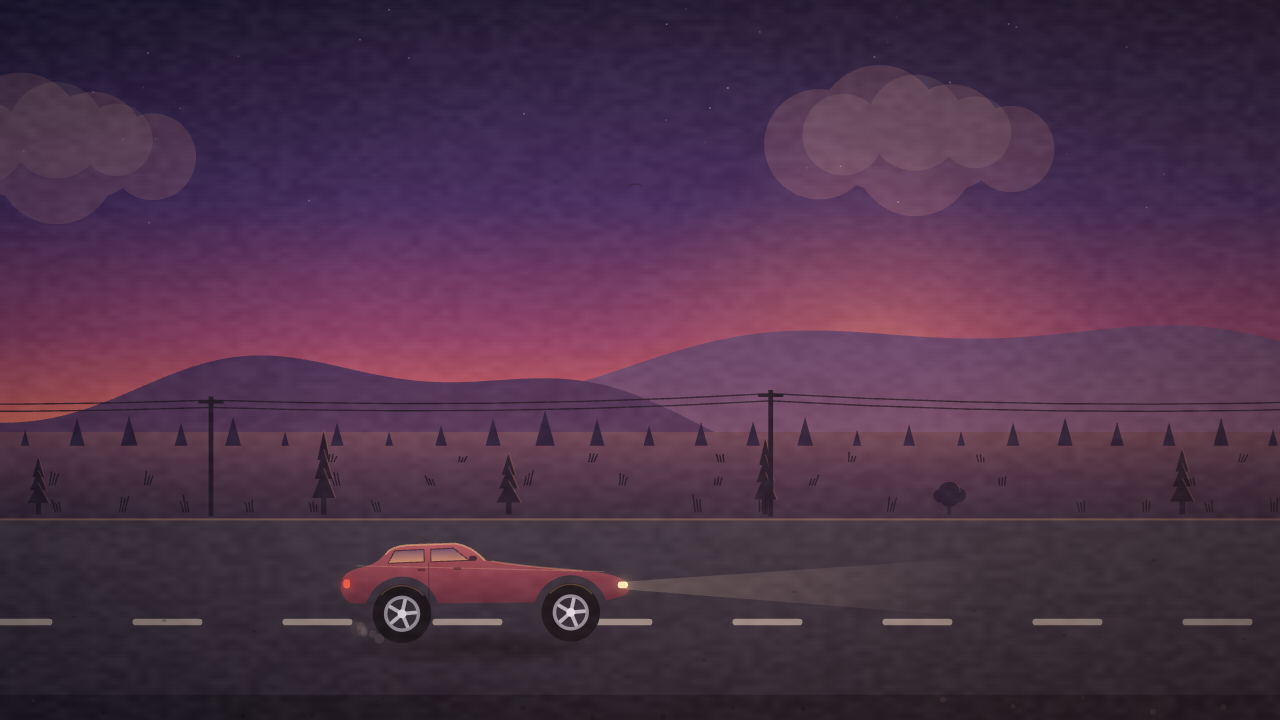
The UD-Q2_K_XL file is 861 GB, of which 799 GB of experts stay file-backed. One generation wrote 23.7k tokens, thinking included, at 1.15 tok/s and temperature 1.0.
Both pages ran as generated. A model five to seven times the machine's RAM sustained coherent single-file programs of 24k to 31k tokens at 1.15 to 1.34 tok/s.
Hy3
Hy3 is the flat-router end of the range. It is a 299B-A21B MoE, streamed as a 159 GB IQ4_XS file on a 128 GB machine with the decode arena at about a 92% hit rate. Decode-only tok/s come from alternated A/B rounds of 512-token generations. Quality was scored at temperature 0.6 and top-p 0.95 on a 12-task goal battery of JSON extraction, constrained format, code with asserts, multi-step arithmetic and length control, plus a repetition check.
| Setting | Decode | Quality |
|---|---|---|
moe_layer_shed: 0.10 |
+8% | Clean |
moe_miss_shed: 0.90 |
+4% | Clean |
| Both together | +13% | Clean |
| The pair softened to 0.07 / 0.93 | +2-4% | Clean |
moe_expert_mass: 0.90 |
~0%, alone or stacked | Clean |
Those are sustained-regime medians. A rested machine ran the same arms faster until the chassis throttled, as Measuring describes. At 0.93, miss-shed sheds only a third of the experts it sheds at 0.90, so the softened pair gained a few percent where the full pair gained 13%.
At the model card's temperature of 0.9, the pair at 0.09/0.91 emitted a stray token into code even under top-p 0.97, while 0.07/0.93 ran clean. With a flat router, expert-mass had no low-mass experts to drop, and at a 92% hit rate the per-layer overhead was the constant cost, so layer-shed gained more. The two shed settings cut disjoint costs, so their gains multiply.
MiniMax-M3
MiniMax-M3 is the low-hit-rate end of the range. It is a 4-of-128-expert MoE, streamed as a 264 GB Q4_K_M file on the same 128 GB machine with the decode arena at about an 87% hit rate, measured the same way as Hy3. A layer stalls when any one of its four routed experts misses, so about 43% of all token-layer calls stall.
| Setting | Decode | Disk stall time |
|---|---|---|
moe_miss_shed: 0.85 |
+1% | -14% |
moe_miss_shed: 0.80 |
+6.5% | -31% |
moe_expert_mass: 0.85 |
~-3% | -9% |
Expert-mass removed reads, but most of them were arena hits that cost
nothing, so its router-side filtering cost more than the stalls it saved.
Miss-shed drops mass only where a stall is otherwise certain. With
moe_miss_shed set to a share P of 0.80, the probe predicts 12% dropped
mass, while the residency-aware shed dropped 2.9%. Two 10k-token generations at temperature 0.6 and top-p 0.95
ran clean.
GLM-5.2
GLM-5.2 changes the routing width. It is a 282 GB UD-IQ3_XXS file with 256 experts routed top-8 under sigmoid gating. On the same machine it streams at a per-expert hit rate near 88%, higher than MiniMax-M3, yet it stalls more, because a layer stalls when any of eight routed experts misses. At that hit rate the stall odds rise from 40% with four experts to 64% with eight.
Each point of hit rate that miss-shed recovers therefore removes more stalls. It gained 16.5% decode at P=0.80 with stalls halved, and 10.7% at P=0.85, both as alternated 512-token medians. Each GB of arena added about 0.2 points of hit rate.
Wider routing also moved the quality threshold. At P=0.80, which was clean on MiniMax-M3, a 12k-token one-page-app generation completed with valid markup and working code. The prompt asked for a car on a road, but the page showed a sky with no road and no car. The lossless run at the same seed drew the full scene, and so did P=0.85.
Kimi-K3
Kimi-K3 UD-Q2_K_XL is 861 GB on the same 128 GB machine, with 896 experts
routed 16 to a token across 92 streamed expert layers. The arena holds a
small fraction of the expert set, the lossless hit rate is about 50%, and
demand stalls take about two thirds of decode wall time. Each shed arm
pairs miss-shed with --moe-prestage keepers. Every setting ran one long
generation on the same one-shot prompt as the scale samples, at
temperature 1.0, for 23k to 30k tokens with thinking included. The figures
are whole-run averages, not alternated A/Bs.
| Setting | Dropped mass | Hit rate | Decode |
|---|---|---|---|
| Lossless, ranked prestage | None | 49.9% | 1.15 tok/s |
moe_miss_shed: 0.80 |
17.1% | 68.0% | 1.19 tok/s (+3%) |
moe_miss_shed: 0.70 |
26.1% | 71.9% | 1.33 tok/s (+16%) |
moe_miss_shed: 0.65 |
30.4% | 74.2% | 1.39 tok/s (+21%) |
Memory pressure sized the wired arena from 29 to 33 GB across the runs, so read the columns as a trend. Shedding raised the remaining experts' hit rate, because the arena stops loading experts that would be dropped anyway. All three shed levels produced complete working pages, as Four shed levels on Kimi-K3 shows. At 0.60, a code generation produced a program that did not work.
DeepSeek-V4.1-Flash engram tables
The engram tier is the first case of more than one streamable table, and of a table read 24 rows deep per token. The figures come from the Q2_K file, 246 GiB in 7 shards, on an M3 Max with 128 GB, gathering from the layer-1 table of 384,006,168 rows at 84 bytes, 30.04 GiB in all.
| Case | Page cache | Result |
|---|---|---|
| Decode, 24 rows, 200 steps | Cold | 0.32 ms mean, 0.19 p50, 0.33 p90, 18.09 max |
| Decode, 24 rows, 200 steps | Warm | 0.17 ms mean |
| Prefill, 4096 tokens, 98,304 rows | Cold | 0.02 s, 5.8M rows/s |
| The same with a thread-pool page touch issued ahead | Cold | 6.35 s, of which 6.34 s is the touch |
| The same as plain, with a concurrent F_NOCACHE reader at 15.8 GiB/s | Cold | 0.02 s, 6.1M rows/s |
The gather is not the bottleneck at either width, so the tier needs no prefill prefetch, and the tables and the expert ring need no I/O arbitration. Crediting both tables as off-disk lets the planner give the arena 75.5 GB, 38% of the experts. Without the credit, it prices the tables as every-token weights and the arena falls to 11 GB.
A table past the size of a 1-D Metal window was once copied into Metal memory instead of mapped. mlx-kquant now gives such a window a second dimension. These figures come from loading each file on its own, once with the table copied and once with a 2-D window.
| Copied | 2-D window | |
|---|---|---|
| Q2_K table, zero-copy views | 61 of 62 | 62 of 62 |
Q2_K table, IOAccelerator |
30.0 GiB | 64 KiB |
| Q2_K table, resident mapped file | 30.0 GiB | 528 KiB |
q8_0 geometry, IOAccelerator |
17.7 GiB | 64 KiB |
The whole model ran as follows on the same machine with --stream-experts
at streaming defaults.
| 120 tokens, tables copied | 200 tokens, tables copied | 120 tokens, 2-D windows | |
|---|---|---|---|
| Decode | 2.03 tok/s | 2.07 tok/s | 5.97 tok/s |
| Prefill | 2.11 tok/s | 2.24 tok/s | 3.28 tok/s |
| Arena | 13 GB, shed to 3 | 13 GB, shed to 3 | 75.3 GB, no shed |
| Arena hit rate | 42.5% | 44.4% | Not recorded. |
| Expert bytes read per token | 2.6 GB | 2.6 GB | Not recorded. |
| Demand-read stalls | 34.2 s of 77 s | 50.5 s of 113 s | Not recorded. |
The larger arena took the disk stalls from 210 ms per token to 33 ms, in
the phase split that GMLX_DECODE_PHASE_STATS=1 prints. The GPU sync time
also halved, because a decode that does not wait on the SSD keeps the GPU
off its clock floor.
GMLX_DECODE_LAYER_PROFILE=2 measured the two hyper-connection routes over
48 greedy tokens after a 16K prompt, with the profile's own syncs included.
This run used DeepSeek-V4.1-Flash-Q2.gguf, the single-file ds4 conversion
that Benchmarks lists, instead of the
Q2_K file.
| Route | Hyper-connections, ms per token | Total ms per token | Decode |
|---|---|---|---|
| Ops | 93.6 | 250.1 | 4.58 tok/s |
| Fused | 19.4 | 162.6 | 6.85 tok/s |
At 64K the fused route spends 19.0 ms per token on hyper-connections, so the term does not grow with depth.
Settings that passed
Four lossy settings passed the certification procedure on the models they were measured on.
| Model | Setting | Quality verdict |
|---|---|---|
| Hy3 IQ4_XS | moe_layer_shed: 0.10 with moe_miss_shed: 0.90 |
The pair showed no defects at temperature 0.6. Lower it to 0.07 and 0.93 at the card's temperature of 0.9. |
| MiniMax-M3 Q4_K_M | moe_miss_shed: 0.80 |
Two 10k-token generations showed no defects. |
| GLM-5.2 UD-IQ3_XXS | moe_miss_shed: 0.85 |
The setting showed no defects. At 0.80 the model dropped scene content but kept valid form. |
| Kimi-K3 UD-Q2_K_XL | moe_miss_shed: 0.65 to 0.80 |
Every level produced working pages, and one sample per level cannot rank their content drift. At 0.60 the code broke. |
Certifying a setting
Quality degrades in a consistent order as the settings become more
aggressive. On Hy3, multi-step arithmetic broke first, well before
coherence, formatting or code. moe_layer_shed: 0.20 alone dropped
arithmetic tasks, and so did moe_layer_shed: 0.10 with
moe_miss_shed: 0.75, although each half of that pair is clean alone.
Past the quality threshold, long generations also show stray token
substitutions, such as wrong-script digits or a bullet character inside
code.
The procedure works on any model.
- Generate with the lossless path and with the candidate setting on the same prompt at the same seed, at the temperature and top-p you deploy with. A check at a lower temperature does not cover a higher one.
- Score a short goal battery of JSON extraction, constrained format, code with asserts, multi-step arithmetic, length control and a repetition check. Put chained arithmetic first if the workload depends on it.
- Generate something long, 10k tokens or more, and scan it for stray tokens. A per-token error rate too small to appear in a short check still accumulates.
- Render the artifact and compare it with the lossless run. Dropped gate mass degrades content before form, so a page can be valid and complete with its subject missing.
- Leave margin on each stacked setting, since their effects add up against a single quality threshold. Certify again whenever routing width or gating changes.
Four settings on Hy3
A one-shot prompt asks for a single-file HTML canvas animation of a car driving through parallax scenery. It ran once for each setting on the same Hy3 IQ4_XS build, at the model card's temperature of 0.9 with low reasoning effort. These are single samples at high temperature, so read them as an illustration rather than a certification.
The prompt (identical for all four runs)
> Write a single HTML file with a full-page canvas and no libraries. > Simulate a realistic side-view of a moving car as the main subject. > Keep the car visible in the foreground while the background landscape > scrolls continuously to create the feeling that the car is driving > forward. Use layered scenery for depth: nearby ground, roadside > elements, trees, poles, and distant hills or mountains should move at > different speeds for a natural parallax effect. Animate the wheels > spinning realistically and add subtle body motion so the car feels > connected to the road. Let the environment pass smoothly behind it, > with repeating but varied scenery that makes the movement feel > believable. Use cinematic lighting and a cohesive sky, such as sunset, > dusk, or daylight, to enhance atmosphere. The overall motion should > feel calm, immersive, and realistic, with a seamless looping > animation.
The lossless run used top-p 1.0 and wrote 13.2k tokens at 3.0 tok/s.

The run with moe_layer_shed 0.07 and moe_miss_shed 0.93 used top-p 0.97 and wrote 10.6k tokens at 3.5 tok/s.

The run with moe_layer_shed 0.10 and moe_miss_shed 0.90 used top-p 0.95 and wrote 11.1k tokens at 3.6 tok/s.

The run with moe_layer_shed 0.20 and moe_miss_shed 0.80 used top-p 1.0 and wrote 10.0k tokens at 4.2 tok/s.
The scene simplifies as the settings become more aggressive, and the first three pages ran clean. The black page failed on its first stray token, a bullet character where an operator belonged. The tok/s figures are whole-run averages of single generations at different lengths, so for the measured comparison read the Hy3 table.
On the same prompt and build, the full pair also ran once at temperature 0.6 and top-p 0.95.

The run with moe_layer_shed 0.10 and moe_miss_shed 0.90 used temperature 0.6 and top-p 0.95 and wrote 10.2k tokens at 3.8 tok/s.
That generation ran clean and drew one of the strongest scenes of the set, which suggests keeping the full pair and its 13% at a slightly lower temperature on this model.
Four shed levels on Kimi-K3
These are the pages from the four runs in the Kimi-K3 table.
The lossless run with ranked prestage wrote 23.7k tokens at 1.15 tok/s.

The run with moe_miss_shed 0.80 and keeper prestage wrote 24.2k tokens at 1.19 tok/s.
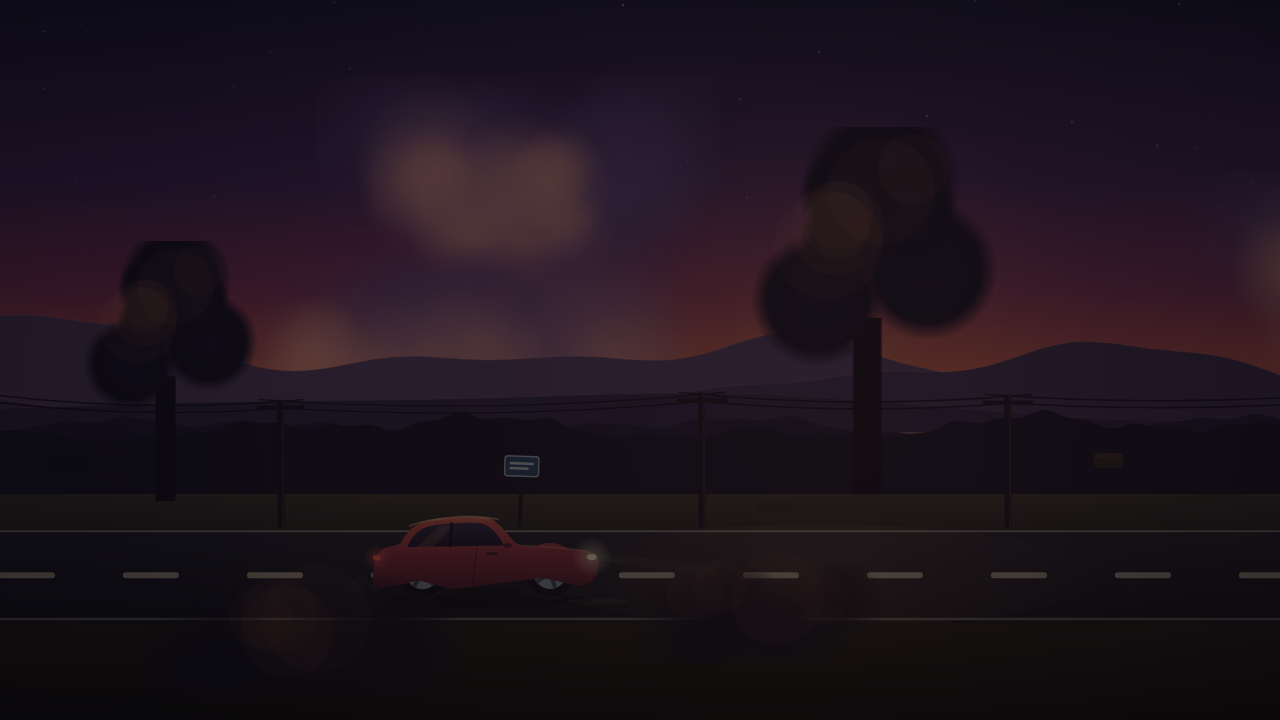
The run with moe_miss_shed 0.70 and keeper prestage wrote 29.6k tokens at 1.33 tok/s.

The run with moe_miss_shed 0.65 and keeper prestage wrote 28.3k tokens at 1.39 tok/s.
All four pages ran as generated, with valid markup, a working animation loop and no stray tokens. What varies is the scene, and it does not worsen steadily as P falls. At 0.80 the car body has small geometry glitches, at 0.70 the page renders far darker than its palette intends, and at 0.65 the car is the most damaged subject. The flaws differ in kind rather than degree, so a single sample for each setting cannot rank adjacent levels.
Lossless setting measurements
These numbers back the table in The lossless settings. All are alternated A/B medians unless noted.
| Setting | Model and machine | Without | With |
|---|---|---|---|
| Prefill feeder, short prompt | MiniMax-M2 Q5_K_M 162 GB, M3 Max 128 GB, 53-token prompt | 19.4 s to first token | 11.4 s |
| Decode feeder | Same model and machine, 512-token generation | 2.4 tok/s page cache, 3.0 tok/s --stream-cpu |
4.0 tok/s average, 4.7 steady at 90% arena hits |
| Arena token split, second-turn prefill | Kimi-K3 UD-IQ2_XXS, M5 Max 128 GB, 48-token turn | 0.25 tok/s | 2.13 tok/s |
| Weight pin | Kimi-K3 UD-IQ2_XXS 662 GB, 62 GB every-token set, M5 Max 128 GB | 0.10 tok/s decode, 0.62 prefill | 0.38 decode, 0.97 prefill |
| Pin excludes converted tensors | HY4 preview release, F32 output head held as bf16 | 22.6 GB pinned | 19.7 GB pinned, 3.5% fewer expert bytes per token |
| GPU keep-warm | GLM-5.2 UD-IQ3_XXS, arena 70 GB, miss-shed 0.85, lookahead off | 2.51 tok/s | 3.64 tok/s |
| GPU keep-warm | Hy3 IQ4_XS, layer-shed 0.10 with miss-shed 0.90 | 4.01 tok/s | 5.29 tok/s |
| Streamable lookup table | qwen4exp Q6 169 GB, short context |
8.4 tok/s, 106 GB wired | 12.6 to 13.4 tok/s, 54 GB wired, converging at 16k depth |
Lookahead prestage recall of the next layer's actual top-k is about 78% on GLM-5.2 at 8 experts and MiniMax-M3 at 4, against about 35% for reusing the previous token's routing.
Keep-warm changes neither stall time nor arena hit rate, since the disk does the same work. The gain is clock residency, so keep-warm helps a streamed model whose per-token time sits in the eval and sync bucket rather than in stalls.
Without the weight pin, the every-token weights are plain file-backed pages, which the kernel evicts between uses on a machine at its free-page minimum. Each token then faults the whole set in again, which shows as compute time rather than stall time. The symptom is a per-token decode time of at least the every-token bytes divided by the SSD bandwidth, whatever the arena hit rate.
Decode feeder defaults
The decode feeder's defaults rest on these measurements. All are from the M3 Max with 128 GB unless the row says otherwise, and each was an A/B on the setting alone.
| Default | Measurement |
|---|---|
| Gathers submitted off the main thread | Submitting off the main thread saved 8 ms of GPU wait per token over the graph-building thread. |
Fast-disk recipe on auto |
With the arena seeded from the prefill ring, a 5.7 GB/s drive gained 7% decode throughput on the fast recipe. An M5 Max drive reads 14 GB/s. |
| No background arena seeder | A seeder filling empty slots from a fast drive seeded 1295 slots over 1000 tokens and cost 0.1 tok/s. |
| Demand reads land in a bounce buffer | A pread straight into the Metal-shared slot saved 7 ms per token of read wait and cost 18 ms per token of GPU time on the gathers. |
| Expert stacks unmapped after install | With the GPU-visible total past physical RAM, each large command buffer paid 50 to 130 ms of driver time before it ran. |